What makes one page rank higher than another on Google?
Is it the title tag? The content? The H1? Or something else entirely?
If you’ve been asking yourself which on page element carries the most weight for SEO, you’re in good company. We at SocialOrange hear this question from clients every single week. And the honest answer is this: title tags carry the most weight for relevance signals — but they never work alone.
Studies from Semrush’s ranking factors research show that text relevance has a 0.47 correlation with rankings — the highest of any measurable on-page signal. And Backlinko’s analysis of Google’s 200 ranking factors consistently puts title tag optimisation at the top of every on-page checklist.
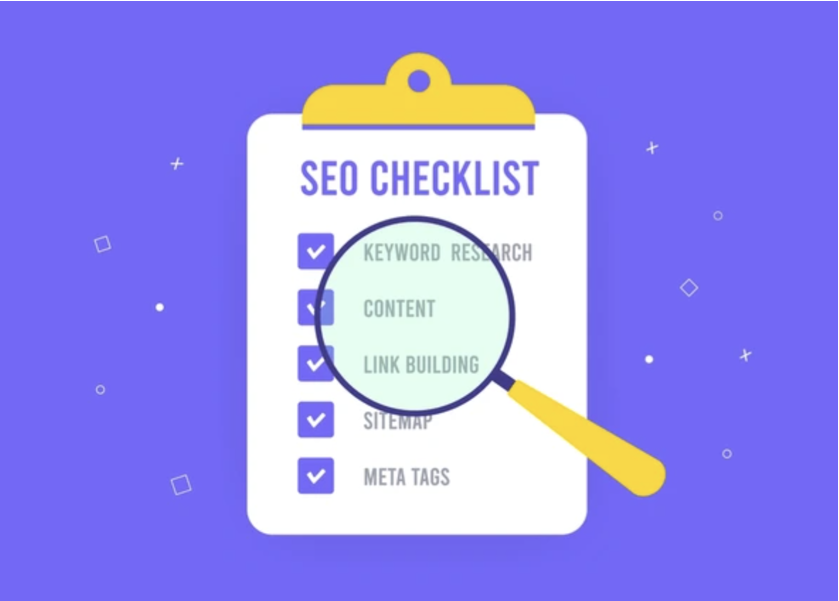
In this guide, we break down every major on-page element, explain what affects SEO ranking most in 2026, and give you a clear on page SEO priority list so you stop wasting time on low-impact changes.
Let’s get into it.Why Understanding Google Ranking Factors On Page Matters
Google processes over 8.5 billion searches every day. That’s an enormous amount of competition for any keyword you’re targeting.
Most websites optimise randomly. They fix a title here, add a keyword there, and hope for the best. The problem? They don’t know what actually moves the needle.
Here’s what the data says:
- 54% of websites have duplicate title tags — one of the most damaging on-page errors
- Titles with 40–60 characters achieve the highest click-through rates in organic search
- URLs containing the target keyword earn 45% higher CTR than those without
- Long-form content (3,000+ words) earns 77.2% more backlinks than short-form articles
Understanding google ranking factors on page means you work smarter. You prioritise what drives results instead of spending weeks on changes that barely move your rankings.
SocialOrange’s approach: We analyse which on page element carries the most weight for SEO for each client individually, prioritise high-impact changes first, and track how each element shifts rankings week over week.
Title Tags: The Most Important On Page SEO Factor
Ask any experienced SEO which on page element carries the most weight — title tags will top nearly every answer.
Google’s own documentation confirms this. Title tags tell search engines what your page is about. They appear in the SERPs. They directly influence click-through rates. And they send the clearest relevance signal of any on-page element.
The problem most sites have: They write vague, keyword-free titles that exceed 60 characters and do nothing for user intent.
According to Google’s John Mueller, title tags are “pretty important” for helping Google understand page content — and when Google rewrites your title in search results, it’s usually because the original wasn’t doing its job well enough.
SocialOrange Title Tag Formula:
- Keep it between 50–60 characters
- Place your primary keyword near the front
- Write it to be click-worthy, not just keyword-rich
- Avoid keyword stuffing — one primary keyword is enough
- Match the search intent of your target query
We’ve seen clients jump from page three to page one purely by fixing weak title tags. This is why the most important on page SEO factor conversation always starts here.
Quick Win: Open Google Search Console right now. Filter for pages with impressions but low CTR. Rewrite their title tags using the formula above. You’ll see results within 2–4 weeks.
SEO Title vs H1 Importance: What’s the Real Difference?
This is one of the most common points of confusion in on-page SEO — and it’s worth clearing up clearly.
Your title tag appears in search results, browser tabs, and social shares. It’s what Google shows users before they click.
Your H1 tag appears on the page itself. It’s what the user sees after they land.
They can be identical. But they don’t have to be — and often, they shouldn’t be.
How to Use Each Effectively:
- Title tag: Optimise for keywords and search intent — this is your hook in the SERPs
- H1 tag: Optimise for clarity and readability — this is your welcome message on the page
- Include your primary keyword in both where it reads naturally
- Use only one H1 per page — multiple H1s dilute the relevance signal
- Use H2 and H3 tags to structure content and include secondary keywords
On the seo title vs h1 importance question: title tags carry more ranking weight, but H1 tags support both user experience and content structure. Both belong at the top of your on page SEO priority list.
Content Quality: What Affects SEO Ranking Most After Titles
Great titles get the click. Great content earns the ranking.
Google’s E-E-A-T guidelines (Experience, Expertise, Authoritativeness, Trustworthiness) have made content quality a non-negotiable ranking factor — especially for competitive or YMYL (Your Money, Your Life) topics.
Thin, generic content that doesn’t fully answer the user’s query won’t rank well in 2026, regardless of how well-optimised your title tag is.
What “Content Quality” Actually Means for Rankings:
- Search intent match: Does your content give the user exactly what they searched for?
- Depth over length: Comprehensive answers beat long-winded filler every time
- Freshness: Outdated content loses rankings — update it regularly
- Readability: Short paragraphs, clear subheadings, bullet points — make it easy to scan
- E-E-A-T signals: Author credentials, cited sources, first-hand experience — show your expertise
- Semantic keywords: Use related terms and LSI keywords, not just your exact focus keyword
Content quality is what affects SEO ranking most after title tags. It determines whether visitors stay engaged or bounce — and user engagement signals (time on page, scroll depth) are increasingly factored into how Google evaluates page quality.
That’s why our team at SocialOrange treats content strategy as central to every google ranking factors on page audit we run. To understand how this ties into a broader SEO strategy, read our guide on how a professional SEO company in India builds authority and rankings.
Building Your On Page SEO Priority List
Not every element deserves equal time and attention. Here’s exactly how we rank the best on page SEO factors 2026 at SocialOrange:
🔴 High Priority — Do These First
- Title tags — The single most important on page SEO factor for relevance signals
- H1 tags — One per page, keyword-rich, clear and reader-friendly
- Content quality — Match user intent completely; prove expertise through depth
- URL structure — Short, clean, keyword-rich (e.g. /on-page-seo-factors)
🟡 Medium Priority — Optimise Next
- Meta descriptions — Don’t rank directly but boost CTR from the SERPs
- Internal linking — Spreads page authority and helps Google crawl your site
- Image alt text — Helps accessibility and gives Google more context signals
- H2 and H3 structure — Organise content logically; include secondary keywords
🟢 Lower Priority — Fine-Tune Later
- Schema markup — Unlocks rich snippets in SERPs (great for FAQs, products, reviews)
- Core Web Vitals / Page speed — A baseline requirement; fix only after core content issues
- Mobile-friendliness — Essential, but most modern themes handle this automatically
The mistake most websites make: They spend weeks on schema markup and page speed before fixing broken title tags. Follow this on page SEO priority list in order and you’ll see results within weeks, not months.
The Best On Page SEO Factors 2026: What Has Changed
The fundamentals haven’t moved — title tags, quality content, and proper structure still dominate. But the way Google evaluates them has evolved significantly.
What’s Changed in 2026:
- Core Web Vitals matter more: As of late 2025, 54.6% of websites pass Core Web Vitals — if yours doesn’t, you’re already behind
- E-E-A-T weight has increased: Google now heavily evaluates first-hand experience signals, especially for health, finance, and business topics
- AI-generated content scrutiny: Generic AI content without expertise signals faces tougher evaluation — always add human insight and original data
- Semantic understanding over exact match: Google no longer needs the exact keyword repeated — it reads topical context, so write for humans first
- User engagement signals: Time on page, scroll depth, and low bounce rates are stronger indirect ranking signals than ever before
What Hasn’t Changed:
- Title tags remain the strongest on-page relevance signal
- Content that fully answers the search query ranks best
- Internal and external linking structures continue to carry significant weight
When clients ask us which on page element carries the most weight for SEO, we always explain this full picture: title tags lead, but 2026 success means treating every element in your on page SEO priority list as part of one integrated system.
Internal Linking: The Underrated Google Ranking Factor On Page
Internal links don’t get the attention they deserve — and that’s a big missed opportunity.
Strategic internal linking does three things simultaneously:
- Passes link equity from your strongest pages to your newer or weaker ones
- Signals to Google which pages are most important on your site
- Keeps users engaged longer by guiding them to related content
Most websites either link randomly (with generic “click here” anchor text) or not at all — leaving orphan pages that Google rarely crawls and users never find.
SocialOrange’s Internal Linking Strategy:
- Link from high-authority pages to newer content that needs a rankings boost
- Use descriptive anchor text that tells both Google and the user what the linked page covers
- Build topic clusters around pillar content — one broad guide supported by several detailed posts
- Audit internal links quarterly to fix broken ones and update outdated anchor text
For a deeper look at how a smart linking strategy connects to your overall SEO performance, check our post on 7 strategies the best SEO company in Bangalore uses to rank websites — it covers how we build site-wide authority, not just page-level optimisation.
Internal linking is part of the best on page SEO factors 2026 that most competitors underinvest in — which makes it one of the fastest wins available to you right now.
Why These On-Page Elements Work Together
No single element operates in isolation. Google evaluates the entire page as one coherent signal.
Think of it like a job application:
- Title tag = your CV headline — it gets you the interview (the click)
- H1 tag = your opening line — it sets the context on arrival
- Content = your full answers — it proves you deserve the role (the ranking)
- Internal links = your references — they show Google there’s a broader body of credible work
- External links = your citations — they signal you’ve done the research and back claims with data
A perfect title can’t save thin content. Exceptional content won’t rank with a missing or duplicate title tag. And neither will perform at their best without a clean internal link structure supporting them.
This is exactly why SocialOrange applies a holistic approach: we optimise all elements together, ensure consistency between title, H1, and content, and build internal structures that support the main topic from every angle.
Why Choose SocialOrange For On Page SEO?
At SocialOrange, we know exactly which on page element carries the most weight for SEO — because we test it every day across 300+ brands in India and beyond.
What makes us different:
- Data-driven priorities: We follow a proven on page SEO priority list, not guesswork or generic checklists
- Full-stack team: SEO strategists, content writers, and developers working as one unit
- Transparent reporting: You see exactly which changes drove which ranking improvements
- ROI focus: We measure success by leads and revenue, not vanity rankings
Our clients see pages climb from invisible to top ten. Traffic grows month over month. Leads increase without increasing ad spend.
We don’t just tell you the best on page SEO factors 2026 — we implement them, track the results, and optimise continuously.
Contact SocialOrange today to get a free on-page SEO audit and start climbing Google’s rankings.
Conclusion
So — which on page element carries the most weight for SEO?
Title tags lead the pack. They send the strongest relevance signals to Google, influence click-through rates directly, and are the fastest element to fix for measurable results.
But they don’t work alone. H1 tags, content quality, URL structure, internal linking, and image alt text all contribute to how Google evaluates your page. The most important on page SEO factor is title tags — backed up by everything else on your priority list working together.
Focus on titles first. Fix your H1. Improve your content depth. Build smart internal links. Then work through the rest of the list systematically.
That’s how you rank in 2026.
Ready to turn your on-page SEO into real rankings and real revenue? Work with SocialOrange — the SEO partner that turns traffic into measurable growth.
Frequently Asked Questions
Which on page element carries the most weight for SEO?
Title tags carry the most weight for sending relevance signals to Google. They tell search engines what your page is about, appear directly in search results, and influence click-through rates. When combined with quality content and a proper H1 tag, an optimised title tag consistently drives the strongest ranking improvements of any single on-page change.
What affects SEO ranking most in 2026?
Title tags, content quality, and search intent matching affect SEO ranking most in 2026. Google also weighs E-E-A-T signals (Experience, Expertise, Authoritativeness, Trustworthiness) and Core Web Vitals performance. Focusing on these areas delivers the biggest impact on your rankings in the current algorithm environment.
What is the most important on page SEO factor for beginners?
Start with title tags — they’re the most important on page SEO factor you can directly control. Keep titles under 60 characters, include your target keyword near the front, and make them compelling enough to earn the click. Once title tags are fixed, improve content quality and H1 structure.
Is the SEO title the same as the H1 tag?
No. The SEO title (or title tag) appears in search results and browser tabs — it’s what Google shows before the user clicks. The H1 tag appears on the page itself after the user has landed. Both should include your primary keyword, but the title tag should be optimised for search intent and CTR, while the H1 should be clear and reader-friendly.
How long does on page SEO take to show results?
Most on-page SEO changes show measurable results within 2–8 weeks, depending on how frequently Google crawls your site. Title tag updates often produce results faster — sometimes within days of re-crawling. Content improvements may take slightly longer as Google re-evaluates the full page. Consistent optimisation accelerates results over time.
Should I optimise title tags or content first?
Optimise title tags first. They are which on page element carries the most weight for SEO, and fixing them produces the fastest measurable wins. Then improve content quality to match user intent fully. Our on page SEO priority list puts title tags at the top because they give the quickest return on optimisation effort.