
Want your pages to rank higher on Google this year? You’re not alone. Most businesses struggle to get their content seen — and the reason is almost always the same. They overlook the on page seo factors that Google actually evaluates when deciding who ranks.
At SocialOrange, we’ve helped over 300 brands climb Google’s rankings by focusing on exactly these elements. On page seo factors are the signals you control directly on your website — the ones that tell Google what your page is about and show users they’ve found the right answer.
This complete on page seo guide walks through every major factor, step by step. You’ll get our full on page seo checklist, proven on page optimization techniques, and a clear roadmap to rank #1 in 2026.
Let’s get into it.
Why On Page SEO Factors Matter More Than Ever in 2026
Google’s algorithm has grown significantly smarter over the past three years. It now reads and evaluates content the way a human expert would — which means weak on page seo ranking factors are harder to hide than ever before.
The problem: Many websites lose rankings without warning and don’t know why. In most cases, the root cause is poor on-page optimisation — content that doesn’t match search intent, titles that fail to signal relevance, or pages without a logical structure for Google to follow.
What the data shows: Pages with strong on page seo ranking factors receive up to 5x more organic traffic than poorly optimised equivalents targeting the same keyword. Google’s 2025 Helpful Content updates made this gap even wider by rewarding pages that demonstrate genuine expertise.
According to Moz’s on-page SEO research, on-page elements remain among the most controllable and impactful ranking signals available to any website owner — making them the highest-ROI place to invest your optimisation time.
SocialOrange’s approach: We audit every on-page element for our clients, align content with search intent first, and track ranking changes weekly to catch issues before they compound. When you master on page optimization techniques, you build the foundation that makes every other SEO effort — content, links, and PR — perform significantly better.
Keyword Research and Placement Strategy
Keywords remain the backbone of on page seo factors. But in 2026, it’s not about how many times you use a keyword — it’s about where and how naturally you place it.
The problem: Some websites still cram keywords into every sentence. Google’s spam detection has made this counterproductive. Keyword stuffing signals low quality and triggers ranking penalties that take months to recover from.
The insight: Google wants your primary keyword to appear in specific high-value locations. The title tag, URL, first 100 words of body content, and at least one H2 heading are the spots that carry the most weight. Everything else is supporting context.
SocialOrange’s Keyword Placement Formula:
- Place your primary keyword in the title tag — as close to the front as possible
- Include it naturally in the first paragraph within the opening 100 words
- Use secondary keywords in H2 and H3 headings throughout the page
- Weave in LSI keywords (related terms like “on page seo checklist” or “seo content optimization”) naturally in the body
- Include it in the image alt text of at least one image
We map keyword placement before a single word of content is written. This ensures every page follows on page seo ranking factors best practices from the ground up — not as an afterthought.
Title Tags and Meta Descriptions
Title tags are the first signal Google reads when evaluating your page. The importance of meta tags in SEO cannot be overstated — they are the single most direct relevance signal you can send to both Google and the user searching for your content.
The problem: A dull, vague, or keyword-free title gets skipped — even when your page ranks. Low click-through rates tell Google your result isn’t satisfying users, which causes rankings to slide over time.
The insight: Titles under 60 characters consistently outperform longer ones in organic CTR. Power words like “complete,” “proven,” “2026,” or “checklist” drive significantly higher clicks. Your primary keyword should appear within the first 3–4 words.
Title and Meta Best Practices:
- Keep titles between 50–60 characters (Google truncates anything longer)
- Front-load your main keyword — don’t bury it at the end
- Add a year, number, or power word to signal freshness and value
- Write meta descriptions under 160 characters with a clear call to action
- Make the meta description answer: “Why should I click this result?”
Meta descriptions don’t directly affect rankings — but they directly affect clicks, and higher click-through rates reinforce your rankings over time. We treat title tags as one of the most critical on page seo factors in every campaign we run.

Header Tags and Content Structure
How you organise content on the page affects both Google’s ability to understand it and a user’s willingness to read it. Header tags create a clear hierarchy that serves both audiences simultaneously.
The problem: Walls of unbroken text drive readers away. When users leave immediately, bounce rates climb — and Google interprets high bounce rates as a signal that your content didn’t satisfy the query.
The insight: Google scans H1, H2, and H3 tags to build a mental map of your page’s topics. Each page should have exactly one H1 (your main title). H2s divide content into major sections. H3s add detail and depth within those sections. This hierarchy helps Google understand topical coverage, not just the primary keyword.
Header Structure Best Practices:
- Use exactly one H1 per page — it should match or closely mirror your title tag
- Include your primary or secondary keyword in at least two H2 headings naturally
- Keep paragraphs under 4 sentences — short paragraphs improve readability on mobile
- Add a new subheading every 200–300 words to break up long sections
- Use H3s to answer specific sub-questions within each H2 section
Proper heading hierarchy is one of the easiest wins on any on page seo checklist — and one of the most commonly skipped. Most competitors ignore it. That’s your opportunity.
Content Quality and Search Intent Alignment
Google’s top priority in 2026 is satisfying the searcher. Your content must match not just the keyword — but the intent behind the search. This distinction is what separates pages that rank from pages that stagnate.
The problem: A page might target the right keyword but answer the wrong question. A user searching “on page seo factors” wants a practical guide — not a sales pitch. When content mismatches intent, users click back to Google within seconds, sending a clear negative signal.
The insight: Google doesn’t reward longer content automatically. It rewards content that completely solves the user’s problem. There are four types of search intent — informational, navigational, transactional, and commercial — and your content format must match whichever one your target keyword triggers.
How We Align Content with Intent at SocialOrange:
- Analyse the top 5 ranking pages before writing — what format do they use? What questions do they answer?
- Match the expected content format (guide, list, how-to, comparison) exactly
- Answer the main question within the first section — don’t make users scroll to find the answer
- Cover related subtopics to build topical depth that signals expertise to Google
- Apply E-E-A-T signals throughout — cite sources, reference real experience, show credentials
As Google’s official SEO starter guide confirms, creating helpful, reliable content that puts the user first is the single most important thing you can do for your search rankings. Our seo content optimization process starts with this principle every time.
To understand how this content approach connects to a complete SEO strategy, read our guide on how a professional SEO company in India builds authority and rankings — it covers exactly how content depth ties into long-term SERP dominance.
Image Optimisation and Alt Text
Images improve engagement and break up content visually — but unoptimised images can silently kill your rankings by dragging down page speed and wasting Google’s contextual understanding of your page.
The problem: Large, uncompressed images inflate page load times. Since Google now measures Core Web Vitals as a ranking signal, slow pages face a direct ranking penalty — not just a user experience issue.
The insight: Every image is an optimisation opportunity. Descriptive file names, compressed file sizes, modern formats, and accurate alt text all combine to improve both speed scores and Google’s understanding of your visual content. Alt text is also how screen readers interpret images — making it both an accessibility and an SEO requirement.
Image Optimisation Checklist:
- Compress all images before uploading — target under 100KB for most web images
- Use descriptive file names that include your keyword where natural (e.g. on-page-seo-factors.png)
- Write alt text that describes the image and includes a relevant keyword naturally
- Use WebP format where possible — it’s 25–35% smaller than JPG at the same quality
- Add captions to images where relevant — Google reads them as additional context
Meta tags and image optimisation work together as part of the broader on page seo factors system. Audit your image library every quarter — file sizes tend to creep up over time without regular checks.
Internal Linking and Site Architecture
Internal links are one of the most underinvested on page optimization techniques available — and one of the highest leverage points for improving rankings across your entire site, not just individual pages.
The problem: Pages without internal links become orphans. Google discovers them slowly, ranks them poorly, and users never find them. Most websites link randomly or use meaningless anchor text like “click here” — wasting every opportunity to pass authority and guide both users and crawlers.
The insight: Strategic internal linking builds topic clusters. When a pillar page links to all related subtopics — and those subtopics link back — Google recognises your site as a topical authority on the subject. This signals expertise and keeps users engaged longer, both of which improve rankings.
SocialOrange’s Internal Linking Strategy:
- Link new posts to relevant existing content from the first publish — never launch an orphan page
- Use descriptive anchor text that tells Google and the user what the linked page covers
- Build pillar pages that link out to all supporting subtopics in a cluster
- Audit for broken links monthly — broken links bleed authority and frustrate users
- Prioritise links from high-traffic, high-authority pages to new content that needs a boost
See how we apply this approach at scale in our post on 7 strategies the best SEO company in Bangalore uses to rank websites — including how topic clusters have driven consistent first-page results for clients across industries.
URL Structure and Technical On-Page Elements
Clean URLs are a small but consistent ranking signal — and they contribute to the overall impression of quality and trustworthiness that influences how Google evaluates your page.
The problem: Long URLs with random numbers, excessive parameters, or irrelevant words dilute the relevance signal. They’re also harder for users to remember, share, or trust at a glance.
The insight: While URL structure isn’t a dominant ranking factor, short, keyword-rich URLs consistently outperform messy ones. They also earn higher CTR — users are more likely to click a result when the URL itself reinforces that the page is relevant to their search.
URL and Technical Best Practices:
- Include your primary keyword in the URL — keep it to the most important terms only
- Use hyphens between words (not underscores — Google treats hyphens as word separators)
- Remove unnecessary stop words (a, the, and, of) to keep URLs clean and short
- Target under 60 characters for your URL slug wherever possible
- Implement schema markup — FAQ schema, Article schema, and Breadcrumb schema all earn more SERP real estate
- Ensure your page passes Core Web Vitals — LCP, FID, and CLS scores now directly affect rankings
Semrush’s comprehensive on-page SEO research confirms that technical on-page elements like URL structure and schema markup work as multipliers — they amplify the impact of strong content and title tags rather than replacing them.
Why All On Page SEO Factors Work Together
No single element guarantees rankings. The pages that dominate competitive keywords in 2026 are the ones where every on page seo factor is working in harmony.
When title tags, content quality, heading structure, image optimisation, and internal links all align, Google sees a complete, trustworthy resource. Users stay longer and engage more deeply. Bounce rates drop. Rankings compound.
Think of it this way:
- A great title without great content earns clicks that immediately bounce
- Great content without a strong title never gets clicked in the first place
- Both together without internal links sit in isolation, unable to build the authority needed to rank long-term
This is why our team at SocialOrange applies a systems-based approach to every client’s site. We audit all on page seo ranking factors together — never in isolation — and we prioritise changes based on which gaps will have the highest compounding impact.
For businesses that want to move from SEO theory to measurable results, read how we’ve helped companies outrank competitors through professional SEO execution in India — including the exact on-page process we follow.
Why Choose SocialOrange For On Page SEO Optimisation
Finding the right SEO partner to implement these on page seo factors correctly makes the difference between slow progress and real ranking momentum.
At SocialOrange, we don’t just give you a checklist — we execute it, track the results, and continuously improve based on what the data shows.
- 300+ brands served across e-commerce, SaaS, healthcare, professional services, and more
- Data-driven priorities: We follow a proven on page seo checklist, not guesswork
- Full-stack team: SEO strategists, content writers, and developers under one roof
- Transparent reporting: Weekly dashboards show exactly which changes improved which rankings
- ROI focus: We measure success by leads and revenue — not vanity metrics
Our clients see pages climb from invisible to top ten. Traffic grows month over month. Leads increase without increasing ad spend. That’s what a properly executed complete on page seo guide delivers when it’s applied consistently.
Contact SocialOrange today for a free on-page SEO audit. Let’s build your roadmap to rank #1.
Conclusion
Mastering on page seo factors in 2026 takes consistent effort across every element of your page — not just title tags or keywords in isolation.
This complete on page seo guide covered everything that matters: keyword placement, title and meta optimisation, header structure, content quality and intent alignment, image optimisation, internal linking, URL structure, and technical signals. Each element reinforces the others.
Follow this on page seo checklist systematically. Prioritise high-impact changes first. Measure results weekly. And treat on page optimization techniques as an ongoing practice, not a one-time fix — because the sites that rank #1 in 2026 are the ones that optimise continuously.
Ready to rank #1 on Google? Work with SocialOrange — the on page SEO experts businesses trust to deliver real, measurable growth.
— Rated by 300+ brands
SocialOrange SEO Services
Frequently Asked Questions
What are the most important on page seo factors in 2026?
The top on page seo factors in 2026 are content quality and search intent alignment, title tag optimisation, keyword placement strategy, header structure, and internal linking. E-E-A-T signals and Core Web Vitals performance have also become significantly more important following Google’s recent algorithm updates. Focus on these elements first for the biggest impact on your rankings.
How do on page seo ranking factors differ from off-page SEO?
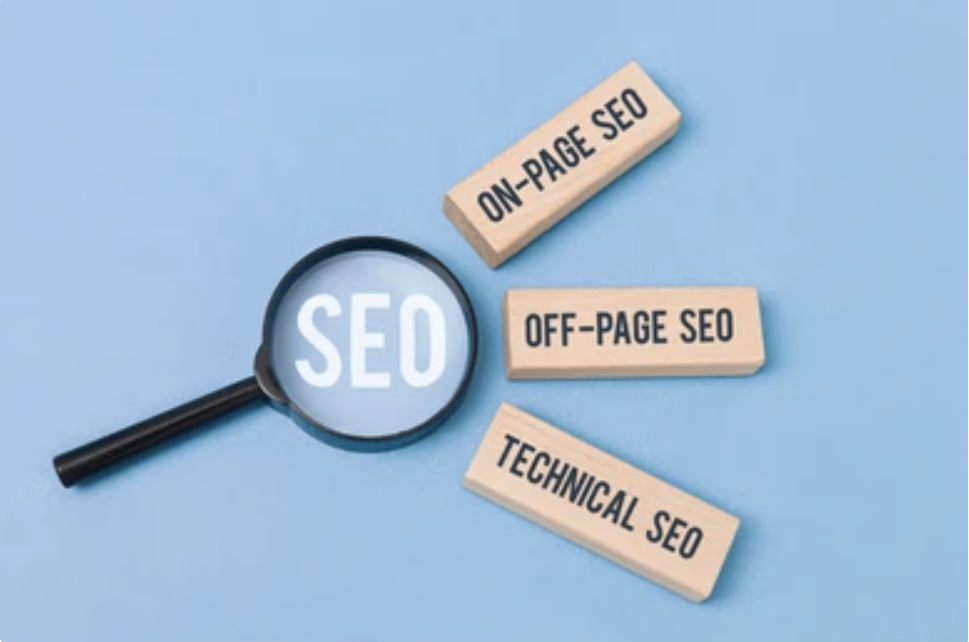
On page seo ranking factors are elements you control directly on your website — including content, meta tags, URL structure, images, and internal links. Off-page factors happen outside your site, primarily backlinks and brand mentions. Both matter for complete ranking success, but on-page factors give you direct control and the fastest path to measurable improvement.
What should my on page seo checklist include?
A complete on page seo checklist should cover keyword research and placement, title tag optimisation (50–60 characters, keyword near the front), meta description with a clear CTA, a single H1 per page with keywords in H2/H3 subheadings, content that fully matches search intent, compressed images with descriptive alt text, strategic internal linking, clean keyword-rich URLs, and schema markup where relevant. Review this checklist for every page you publish or update.
How long does it take to see results from on page optimization techniques?
Most websites see measurable ranking improvements within 4–8 weeks of implementing on page optimization techniques. Technical fixes like page speed improvements can show results faster. Content improvements may take longer as Google recrawls and re-evaluates the full page. Consistency matters more than speed — sites that optimise continuously see compounding results over time.
Can SocialOrange help with seo content optimization for my specific industry?
Yes. SocialOrange has served 300+ brands across diverse industries including e-commerce, B2B SaaS, healthcare, finance, real estate, and professional services. Our seo content optimization approach is tailored to your specific market, audience, and competitive landscape — not a generic template applied to every client. Get in touch for a free consultation to discuss your specific goals.